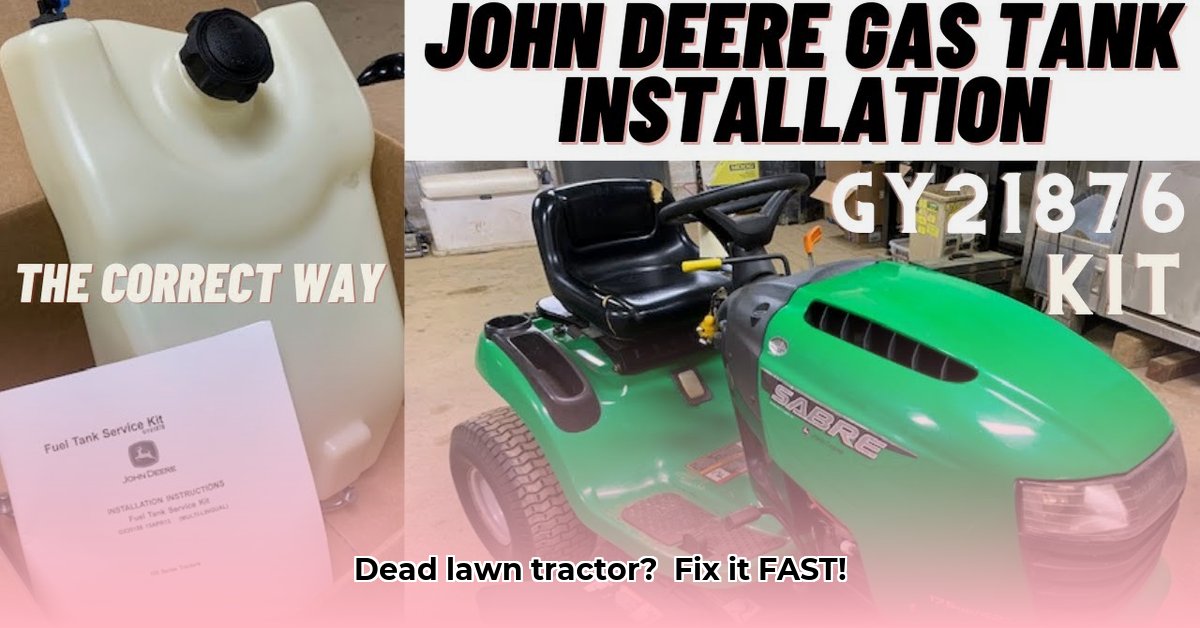
Is Your Lawn Tractor Gas Tank Causing the Trouble? Let's Investigate!
Is your lawn tractor sputtering and refusing to start? A faulty gas tank could be the culprit. Before you call a repair service, let's diagnose the problem. A thorough inspection can save you time and money. What are the clear signs of trouble? For more resources on lawn tractor maintenance, check out this helpful site: Lawn Tractor Parts.
Leaks: Check under your tractor for fuel spills or puddles. Examine seams, the fuel cap, and fuel line connections carefully. Even a small leak can cause significant problems. (See Figure 1 – Insert photo of a leaking gas tank here)
Rust: Rust is a silent destroyer of metal tanks. While surface rust might be tolerable, extensive rust requires immediate tank replacement. A rusty tank poses a major fuel leak risk. (See Figure 2 – Insert photo of a rusty gas tank here)
Damage: Dents, cracks, or holes compromise the tank's structural integrity, leading to fuel leaks and potential safety hazards. (See Figure 3 – Insert photo of a damaged gas tank here)
Finding the Right Replacement Gas Tank: A Perfect Fit Matters
Replacing your gas tank is often straightforward, but choosing the correct one is crucial. Here's what to consider:
Capacity: Select a replacement tank with a capacity similar to the original. Too small, and you'll constantly refill; too large, and installation will be cumbersome and potentially unsafe. How much fuel does your tractor typically use?
Material: Steel tanks are durable but rust-prone. Plastic tanks (typically polyethylene) are lighter, rust-resistant, but more susceptible to cracking from impacts. Your tractor's manual will usually specify compatible materials.
Compatibility: Absolute compatibility with your lawn tractor model is essential. Verify dimensions, mounting points, and fuel line connections to ensure a perfect fit. An incompatible tank leads to installation frustration, and potential damage to your tractor.
Here's a comparison table to help you decide:
| Tank Material | Advantages | Disadvantages |
|---|---|---|
| Steel | Durable, relatively inexpensive | Susceptible to corrosion (rust) |
| Plastic | Lightweight, rust-resistant | Can crack from impacts |
Replacing Your Lawn Tractor Gas Tank: A Step-by-Step Guide
Safety First! Always work in a well-ventilated area, away from open flames. Disconnect the battery's negative terminal before working near fuel lines.
Step 1: Gather Your Tools: Assemble screwdrivers, wrenches, a siphon pump (for fuel removal), your new gas tank, and gloves.
Step 2: Drain the Old Tank: Carefully drain remaining fuel into an approved container. Gasoline is flammable; handle it with care. (Did you know that improper fuel disposal can lead to environmental fines? Always dispose of fuel responsibly.)
Step 3: Remove the Old Tank: Disconnect fuel lines and mounting hardware. Take photos for reassembly reference. Gently remove the tank.
Step 4: Install the New Tank: Position the new tank correctly, attach mounting hardware, and reconnect fuel lines securely. Avoid over-tightening.
Step 5: Test and Inspect: Reconnect the battery. Check for leaks. Run the tractor briefly then re-check for leaks. If all is well, you’re ready to mow!
Important: If difficulties arise, consult your owner's manual or seek professional help. Some replacements may require specialized tools and expertise.
Keeping Your Gas Tank Happy: Maintenance and Prevention Tips
Preventative maintenance extends the life of your gas tank significantly.
Regular Inspections: Inspect your gas tank at the start of each mowing season. Early detection prevents major problems.
Smart Storage: If storing your tractor, empty the tank completely to prevent fuel degradation and tank damage.
Fuel Additives: Fuel stabilizers help prevent gum and varnish buildup, crucial for long-term storage.
Cleanliness: Keep the gas tank area clean and clear of debris to better detect leaks.
Troubleshooting: What if Things Go Wrong?
Here's how to address common problems:
Leaks: Recheck all connections. A faulty gasket may need replacing.
Fitting Problems: If the new tank doesn't fit, verify compatibility. You might need an adapter or a different tank.
Fuel Delivery Issues: If your tractor struggles to draw fuel, check for clogs in the fuel pump and lines.
With this guide, your lawn tractor should be back in action quickly, ready to tame that overgrown yard!